How to Build a Non-Toxic Baby Registry That Actually Works
Published May 15, 2026
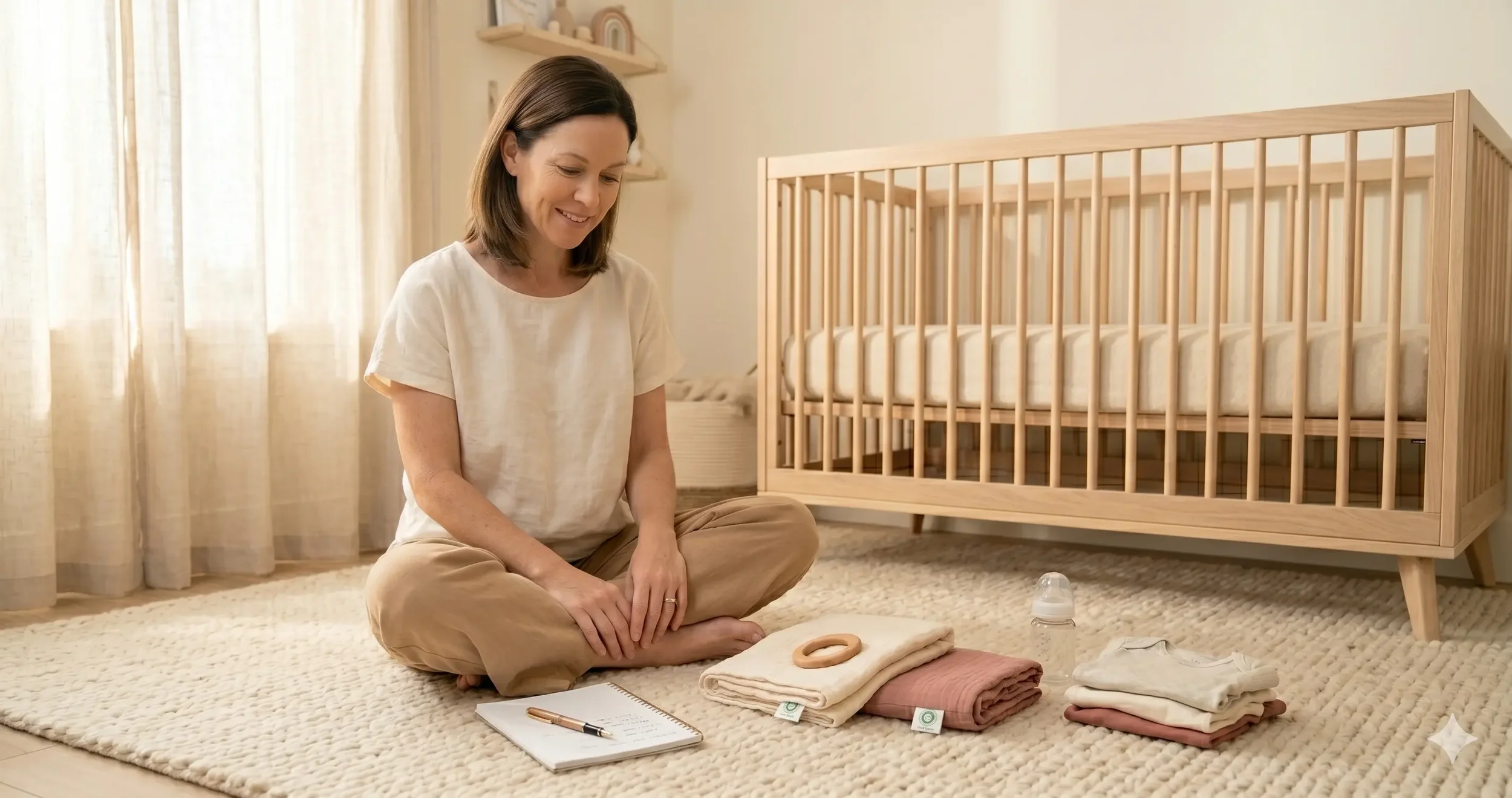
When I was pregnant with my first, my registry took me three weekends and a lot of tears. By the second baby, I built it in under two hours, and the difference wasn't experience. It was a framework. This is that framework, refined across two of my own babies and several years of building registries with parents in our community.
A non-toxic registry isn't about buying more or buying expensive. It's about deciding which categories deserve your scrutiny and which categories don't. Most registries fail because they treat every item as equally important. They are not.
- Get the sleep surface and feeding gear right first. They account for the most chemical exposure due to contact time.
- Five common registry items are unnecessary or counterproductive: wipe warmers, specialty baby detergents, crib bumpers, scented wipes, and most teething products.
- Three certifications cover ~80% of what matters: GREENGUARD Gold for furniture, GOTS for textiles, EWG VERIFIED or MADE SAFE for skincare.
- Hand-me-downs are the lowest-toxicity option in most categories, with two narrow safety exceptions.
- Build in priority order (sleep first, then feeding, then skin-contact, then toys, then furniture, then extras) to avoid registry burnout.
The Two Categories That Matter Most
If you do nothing else with this guide, get the sleep surface and the feeding gear right. These two categories account for more chemical exposure than every other baby product combined, simply because of contact time.
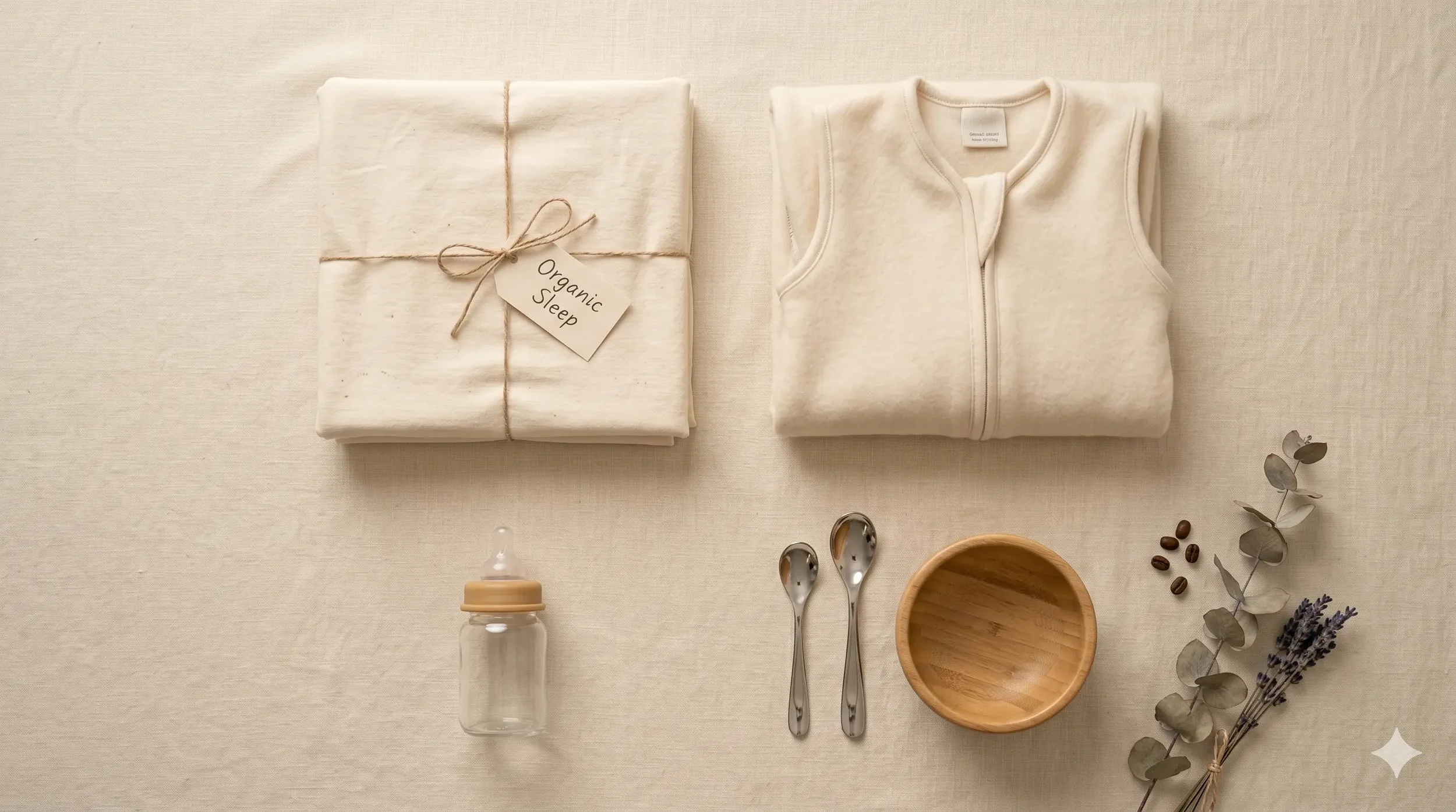
Category 1: Sleep Surface
Your baby will spend roughly 14 to 17 hours a day sleeping in the first months. The crib mattress, sheets, and any swaddles or sleep sacks are in direct, prolonged contact with their skin.
What to look for: GREENGUARD Gold for the mattress (limits VOC emissions)[2], GOTS-certified organic cotton for sheets and sleep sacks[3], and a mattress with no added flame retardants. Wool is naturally flame-resistant and is the most common substitute.
Category 2: Feeding Gear
Bottles, pacifiers, breast pump parts, and the first solids tableware all involve direct contact with food at various temperatures. Heat is what releases chemicals from plastics, which is why this category matters even for parents who breastfeed exclusively.
What to look for: Glass or medical-grade silicone bottles, food-grade silicone or natural rubber pacifiers, stainless steel or bamboo first-foods plates, and BPA-free explicitly extended to also exclude BPS and BPF.
The Five Items I'd Skip Entirely
Every registry guide tells you what to add. Almost none tell you what to remove. These five items show up on most registries and are either unnecessary or actively counterproductive.
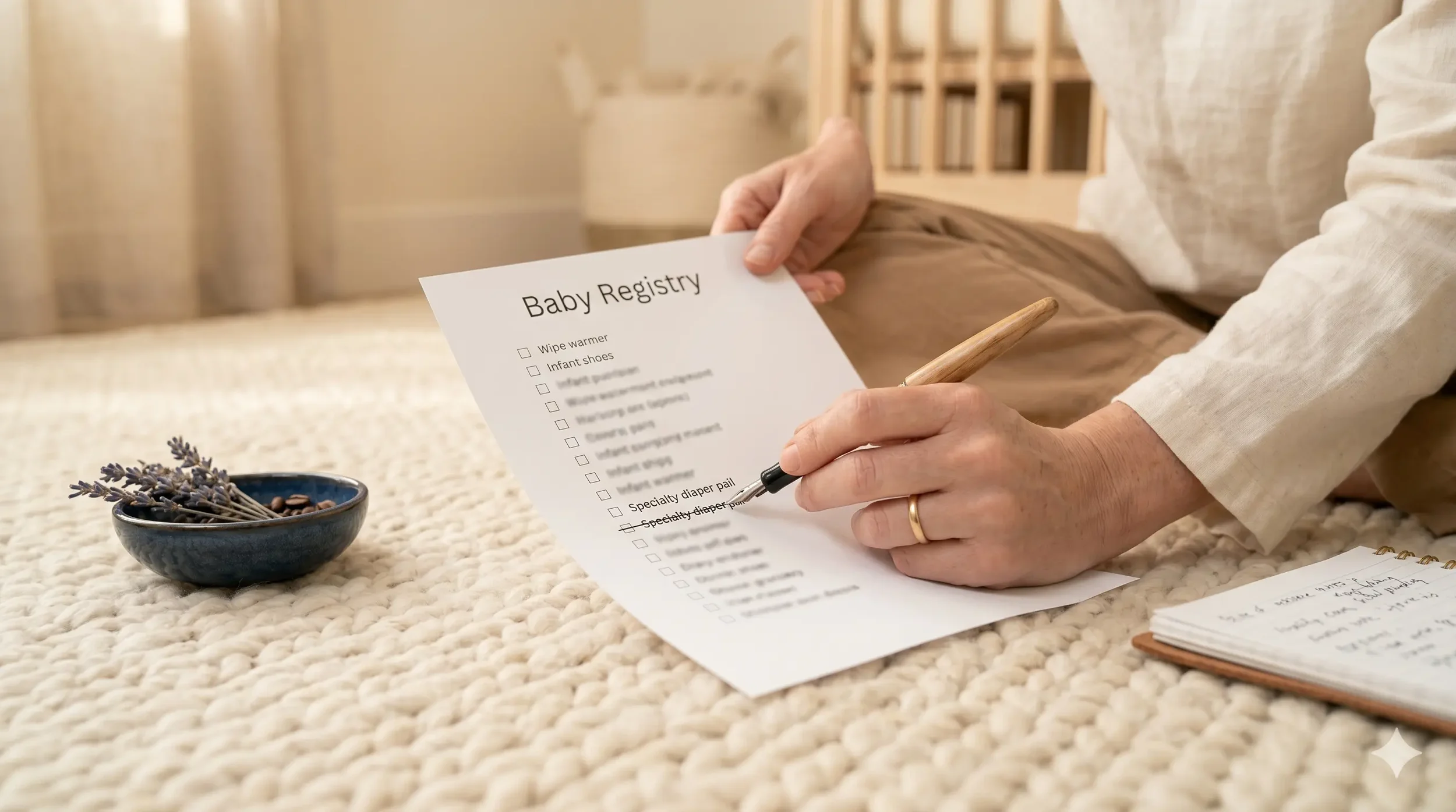
- Wipe warmers. Can grow bacteria and dry out wipes. Cold wipes are fine.
- Specialty laundry detergents marketed for babies. Often contain more fragrances than fragrance-free adult detergents; just buy a fragrance-free option that works for the whole family.
- Crib bumpers. Not safe per the AAP regardless of whether they're labeled "breathable"[1].
- Scented wipe brands. Unnecessary; cotton washcloths and water work for the first months.
- Most teething products with anesthetic ingredients. Have FDA warnings; cold rings work better.
Skin Contact Items: A Tier Two Priority
After sleep and feeding, the next priority is anything else that touches baby's skin for hours per day. This includes diapers, baby carriers, swaddles, and clothing.
Diapers and Wipes
If you're going disposable, look for chlorine-free options certified to OEKO-TEX or with published ingredient transparency. If you're going cloth, GOTS-certified organic cotton is the gold standard. For wipes, water-based with minimal preservatives is the goal. See our diaper cost-and-carbon comparison for the deeper analysis.
Carriers, Swaddles, and Clothing
OEKO-TEX or GOTS-certified fabrics are the priority for anything baby wears for hours. Avoid stain-resistant treatments on baby clothes; these are often PFAS-related coatings. More on PFAS in kids' clothes.
Skincare and Bath Products
EWG VERIFIED[4] or MADE SAFE are the certifications I trust on lotions, soaps, and shampoos. Fewer ingredients is generally better. Babies do not need fragrance.
Want a category-by-category checklist with brands? Join the community for the working registry template that parents are using right now.
Join the Community →Toys: Why Tier Three Doesn't Mean Skip the Standards
Toys are tier three because contact time is shorter and varies enormously by item. But this is also the category with the largest gap between what looks safe and what actually is. Painted wood toys, plastic teethers, and "natural" dyed fabrics all carry their own risks.
The two cleanest categories are unfinished or beeswax-finished hardwood toys and undyed organic cotton or natural rubber items. The mid-quality category is third-party tested plastic toys (look for ASTM F963 compliance plus a published chemical disclosure). The riskiest category is imported decorative or novelty toys without third-party testing, especially soft plastic and painted items.
Furniture and Décor: The Slow-Burn Category
The crib, dresser, glider, and rug stay in the nursery for years, off-gassing slowly the entire time. The single biggest indoor air quality factor in most nurseries is the engineered wood furniture and the rug. Both can release VOCs and formaldehyde for months to years.
For furniture, GREENGUARD Gold is the certification to prioritize, especially on engineered wood pieces. Solid hardwood with low-VOC or no finish is the cleanest option but is expensive. For rugs, look for natural fiber options (wool, cotton, jute) without stain-resistant treatments.
The Hand-Me-Down Question
Hand-me-downs are the lowest-impact, lowest-cost, and often lowest-toxicity choice you can make. The reason is that products that have been used for a year or more have already off-gassed most of their VOCs. A used GREENGUARD Gold crib is essentially the same as a new one, minus the chemical release.
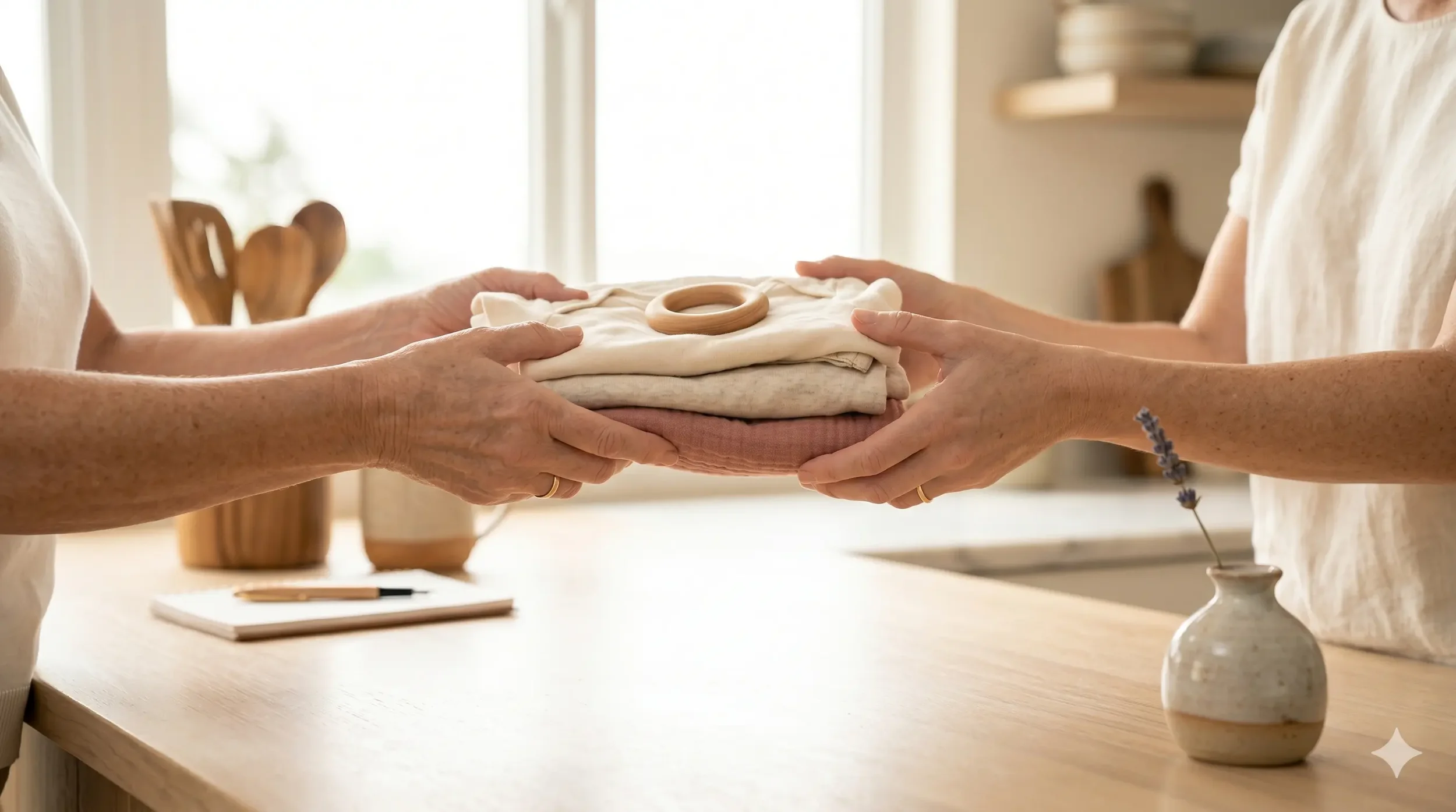
The exceptions: anything with a sleep-safety regulation that's been updated (cribs from before 2011, infant car seats more than 6 years old or with a known history of being in an accident), and items with deeply absorbed contamination (anything that has been mold-exposed or smoke-exposed).
A used registry item from a trusted source beats a new one from a brand you have not vetted.
Build your registry in this priority order to capture the highest-leverage non-toxic choices first.
How to Build the Registry in Two Hours
Once you have the framework, here is the actual sequence I use with parents in our community.
- Start with the sleep surface. Pick the mattress, sheets, and sleep sacks first; everything else is downstream of these decisions.
- Then pick feeding gear, which often locks you into a brand ecosystem (bottle nipples, replacement parts) so it's worth doing once.
- Then move to skin-contact items — diapers, swaddles, clothing, skincare.
- Then toys, then furniture, then the small extras.
The order matters because if you run out of registry energy at hour two, you will have made the highest-impact decisions. For deeper detail on the certifications referenced throughout, see our certifications guide, or run the greenwashing decoder on anything you're not sure about.
Frequently Asked Questions
Is a non-toxic registry significantly more expensive than a standard registry?
The sleep surface and feeding gear cost roughly 30 to 50 percent more for certified options. Most other categories can be matched on cost or are cheaper if you accept hand-me-downs and skip unnecessary items.
What's the single most important certification to know?
For sleep and furniture, GREENGUARD Gold. For textiles, GOTS. For skincare, EWG VERIFIED or MADE SAFE. These three cover roughly 80 percent of what matters.
Should I avoid all plastic in feeding gear?
Not necessarily. Medical-grade silicone is plastic-adjacent and is generally safe. The categories to avoid are polycarbonate (older bottles), PVC, and any plastic that will be heated repeatedly. Glass and stainless steel are simpler defaults.
How do I handle gifts that don't meet our standards?
Accept them graciously, then make individual decisions per item. Some gifts you can return or exchange; others you can use for non-skin-contact purposes (e.g., a non-certified blanket can become a play mat). Direct conflict with gift-givers is rarely worth it for items used briefly.
Can I just shop one brand and trust it?
I'd recommend against it. Even brands I trust have one or two product lines that don't meet my own standards. Reading each individual product label is the only reliable approach.
References
- American Academy of Pediatrics. (2022). Sleep-Related Infant Deaths: Updated 2022 Recommendations for Reducing Infant Deaths in the Sleep Environment. publications.aap.org/pediatrics
- UL GREENGUARD. (2024). GREENGUARD Certification Standards Method. ul.com/services/greenguard-certification
- Global Organic Textile Standard. (2023). GOTS Version 7.0 Certification Criteria. global-standard.org/the-standard
- Environmental Working Group. (2024). EWG VERIFIED Personal Care Standard. ewg.org/ewgverified
Want the working registry template?
Join the free Nest Earth community for the brand-by-brand non-toxic registry checklist parents are using right now, plus weekly product audits and label deep-dives.
Join the Community →