How to Spot Greenwashing in Baby Products: A Parent's Decoder Guide
Published May 13, 2026 · By Gabriela Fiorentino, LEED AP
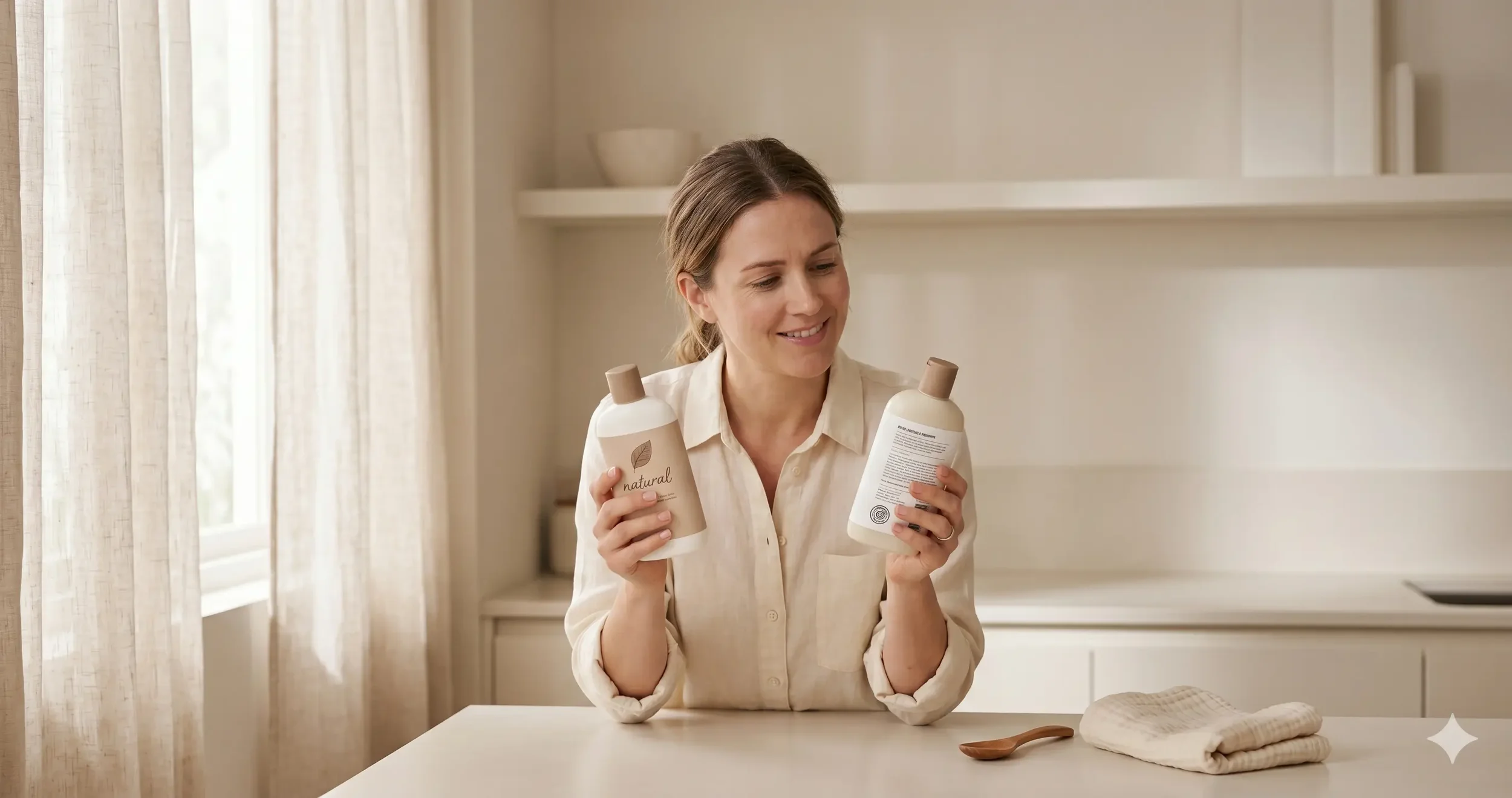
The first time I picked up a "natural" baby lotion and read the actual ingredients on the back, I felt that specific kind of frustrated I think every parent who has tried to shop carefully knows. The front said clean. The back said something different. And once I started looking, I saw the gap everywhere.
This is the guide I wish I had as a new parent. It isn't a list of brands to avoid; it's a way of reading any baby product label so you can decide for yourself.
- "Non-toxic," "natural," and "clean" are not regulated terms in the U.S. Anyone can use them.
- The five most common greenwashing tactics are "free-from" claims, earth imagery, vague words, hero ingredients, and self-designed seals.
- Real third-party certifications include GOTS, OEKO-TEX, MADE SAFE, GREENGUARD Gold, EWG VERIFIED, and USDA Organic.
- The Three-Minute Cabinet Audit catches most greenwashing on existing products in your home.
- If a seal isn't findable in a 30-second search, it's marketing, not certification.
Why Greenwashing Targets Parents So Heavily
A 2024 PricewaterhouseCoopers global consumer survey found that 46% of consumers report buying more sustainable products to help the environment, with parents over-indexing on products marketed for children[3]. That demand is exactly what brands are responding to with vague claims and visual cues, which is why the tactics in this guide are so common.
The substitution problem is the deeper issue. When BPA was removed from baby bottles after the 2012 FDA ban, many manufacturers replaced it with BPS and BPF, which subsequent research found to have similar endocrine-disrupting effects[2]. The cycle is called regrettable substitution in the chemical safety literature, and it's one reason "free-from" framing is rarely a complete answer.
The Five Greenwashing Tactics on Baby Products
I've spent years reading labels for our community, and the same five tactics show up over and over. None of them are illegal. All of them are misleading by design.
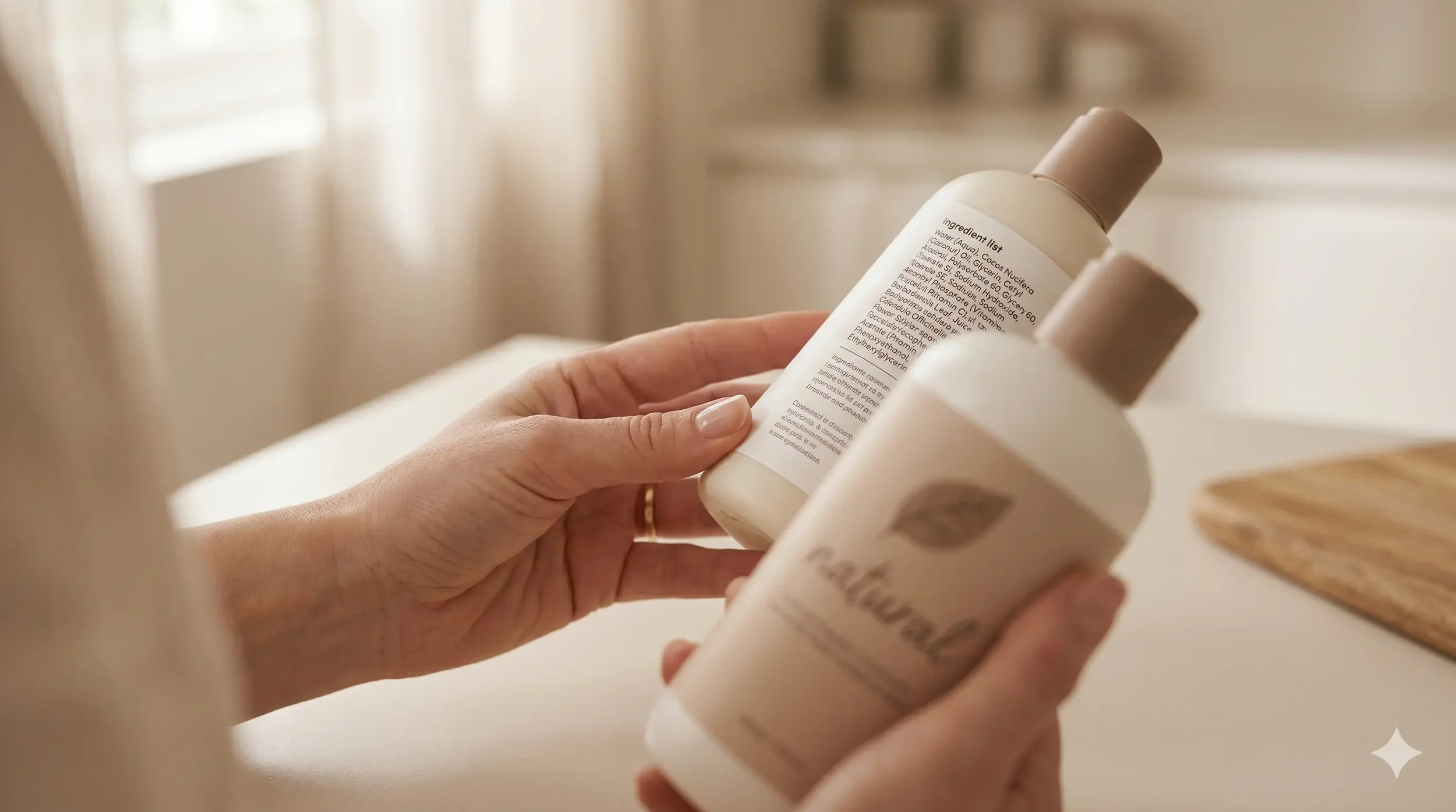
Tactic 1: The "Free From" Distraction
The label loudly announces what isn't in the product (parabens, phthalates, sulfates) while staying quiet about what is. The implication is safety, but the absence of one ingredient doesn't tell you anything about the others.
Spot-check question: If I crossed out the "free from" claims, would the rest of the label still make this product look clean?
Tactic 2: Earth Imagery Without Substance
Leaves, water droplets, mountains, soft greens. Visual cues that have nothing to do with what's in the bottle. The FTC's Green Guides specifically warn against this kind of unsubstantiated environmental imagery, but enforcement is rare[1].
Spot-check question: Could I find one specific, verifiable claim on this label, or just pictures?
Tactic 3: Vague Words With No Standard
"Natural," "pure," "gentle," "clean," and "non-toxic" are not regulated terms in the United States. Anyone can use them on any product. They feel like certifications but verify nothing.
Spot-check question: Is there a specific certification mark next to this word, or is it just floating in marketing copy?
Tactic 4: Highlighted Hero Ingredient
"Made with organic chamomile" on the front. The chamomile is the fourteenth ingredient. The first six are synthetic. This is a classic move in baby skincare and food.
Spot-check question: Where on the ingredient list does the hero ingredient actually appear?
Tactic 5: Self-Designed Seals
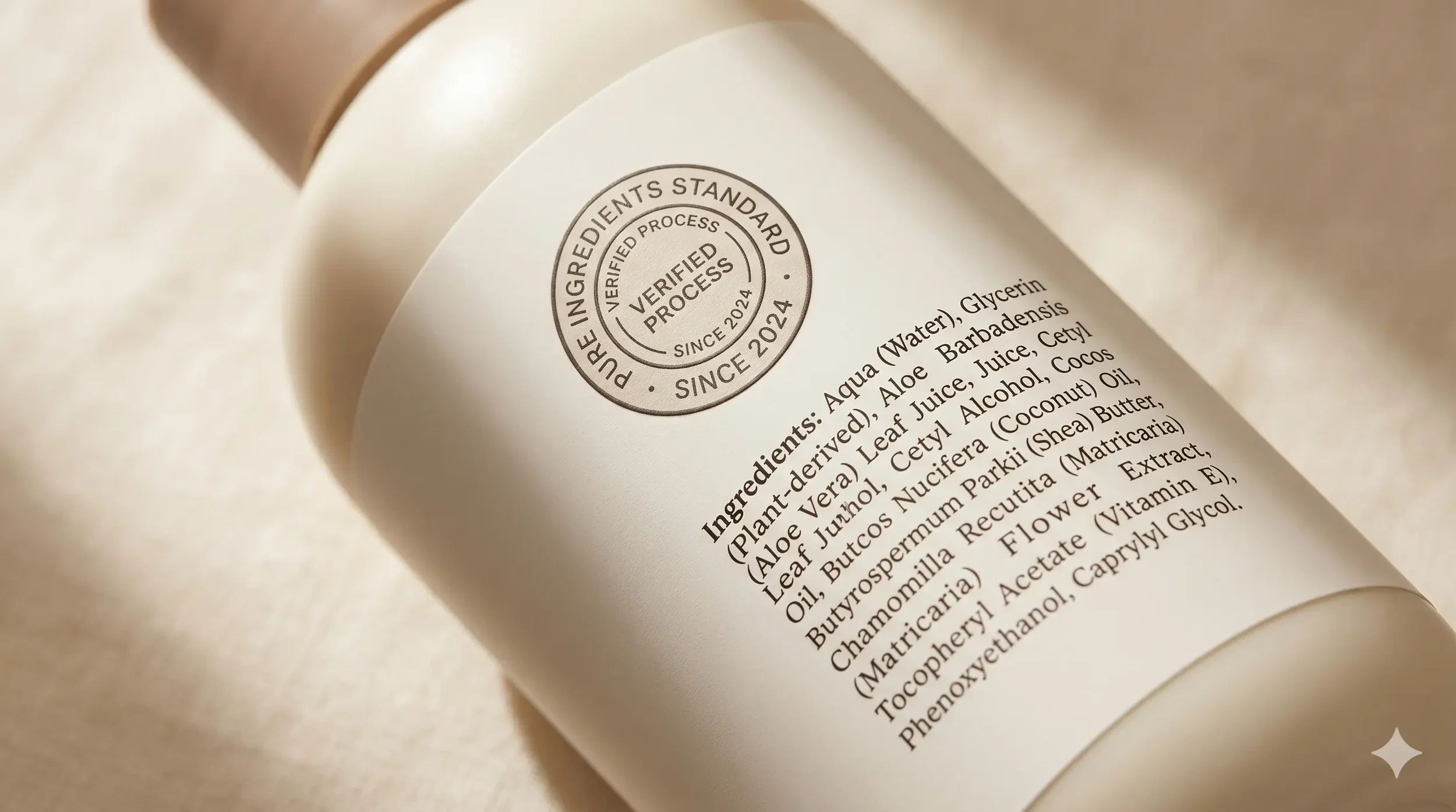
A circular badge that looks like a certification but is actually a brand-created graphic. "Mother approved." "Pediatrician recommended." "Eco-promise." None of these are third-party verified.
Spot-check question: If I look up this seal, will I find an organization with public criteria, or is it just the brand?
The five most common greenwashing tactics on baby products, and the spot-check question to ask for each.
Want to compare what you have at home? Run the Three-Minute Cabinet Audit with parents in our community and see what we've found.
Join the Community →The Three-Minute Cabinet Audit
This is the practical exercise. Pull three baby products from your shelf. Lotion, wipes, and laundry detergent are the most useful starters because they have the most direct skin contact.
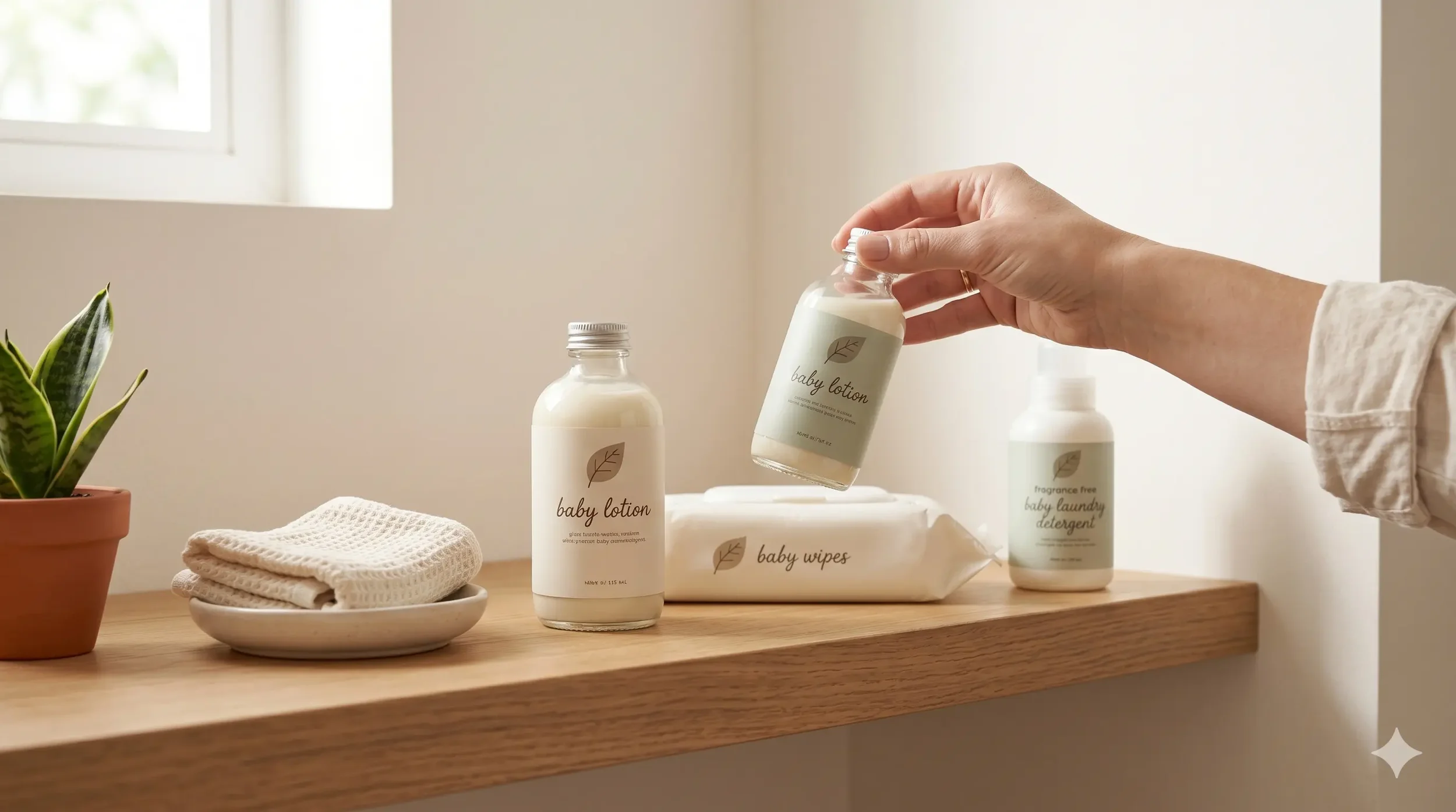
- Cover the front of the package. Then read only the back. If the ingredient list and the back-panel claims wouldn't be enough to convince you alone, the front was doing the persuading.
- Look up any seal you don't recognize. Real certifications have public databases. GOTS, OEKO-TEX, MADE SAFE, GREENGUARD, EWG VERIFIED, and USDA Organic all maintain searchable lists. If the seal isn't findable in 30 seconds, it isn't real.
- Check the position of the headline ingredient. FDA labeling requires ingredients to be listed in descending order of concentration. If the "organic" hero ingredient is below the midpoint of the list, the marketing is doing more work than the formula.
The Certifications That Actually Mean Something
Not all third-party seals are created equal. The ones below have published criteria, third-party verification, and a track record. They are also the ones I look for first when I am buying for my own kids.
- GOTS (Global Organic Textile Standard): for fabrics; covers fiber, processing, and labor.
- OEKO-TEX Standard 100: tests finished textiles for harmful substances at every production stage.
- MADE SAFE: screens against a published list of behavioral, reproductive, and developmental toxicants.
- GREENGUARD Gold: limits chemical emissions for indoor air quality, important for furniture and flooring.
- EWG VERIFIED: meets the Environmental Working Group's strictest criteria for personal care products.
- USDA Organic: for food and some textiles; a known and enforced standard.
I unpack each of these in much more depth, including what they don't cover, in our certifications guide.
What This Looks Like in Real Life
Last month I was at a big-box store comparing two baby lotions side by side. Both had earth-tone labels. Both said "natural" on the front. The first had MADE SAFE certification on the back panel, with a verifiable seal. The second had no third-party certification at all, but the front had three different "free from" claims and a leaf graphic. The price difference was 80 cents.
I bought the certified one, and I want to be honest about why. Not because the uncertified one was definitely harmful, but because I wasn't willing to pay for marketing instead of verification. The 80 cents bought me less guesswork.
Greenwashing isn't always lying. It's often just gaps. The job is to recognize where the gaps are and decide whether you're comfortable with what they hide.
Frequently Asked Questions
Is "non-toxic" a regulated term in the United States?
No. Neither "non-toxic," "natural," nor "clean" are regulated for use on baby products in the U.S. Manufacturers can use them without meeting any specific standard.
Are FDA-approved ingredients automatically safe for babies?
FDA approval focuses on whether ingredients are generally recognized as safe, not specifically on cumulative exposure or developmental safety for infants. Several ingredients FDA permits are restricted in the EU.
How do I know if a certification is real?
Real certifications have a public website with published criteria, a searchable list of certified products, and a third-party verification process. If you cannot find these three things in 30 seconds, the seal is likely brand-created.
Are EU-made baby products always safer?
EU regulations restrict more chemicals in baby products than U.S. regulations do, but this is not a blanket guarantee. Reading the label still matters; the same brand may sell different formulations in different markets.
What's the single biggest greenwashing red flag?
A self-designed seal with no public certification body behind it. If the badge looks official but you cannot find an independent organization that issued it, it is marketing.
References
- Federal Trade Commission. (2012). Green Guides: Guides for the Use of Environmental Marketing Claims. ftc.gov/legal-library
- Rochester, J. R., & Bolden, A. L. (2015). Bisphenol S and F: A systematic review and comparison of the hormonal activity of bisphenol A substitutes. Environmental Health Perspectives, 123(7), 643–650.
- PricewaterhouseCoopers. (2024). Voice of the Consumer Survey 2024. pwc.com/voice-of-consumer-2024
- Global Organic Textile Standard. (2023). GOTS Version 7.0. global-standard.org/the-standard
Want decoder guides like this every week?
Join the free Nest Earth community for label deep-dives, product audits, and parents who actually read the back of the package.
Join the Community →