
How to Create an Eco-Friendly Cleaning Routine That Works
Key Takeaways
You don't need a complicated cleaning schedule or a dozen specialized products to maintain a clean, healthy home. Focus on two daily tasks: wipe kitchen surfaces and vacuum high-traffic areas with a HEPA filter. Handle weekly basics like bathrooms, floors, and dusting. Forget the rest until monthly or seasonal deep cleans. Use about five simple products including multi-surface cleaner, floor cleaner, toilet cleaner, dish soap, plus baking soda and vinegar. That's it. Simple, sustainable, and way less time-consuming than constantly playing catch-up with grime.
Most cleaning routines fail because they're either too ambitious with elaborate daily schedules that fall apart after one missed day, or too vague where you only clean when things get really bad and require harsh chemicals
The two high-impact daily tasks that deliver the highest return for health and air quality are wiping down kitchen surfaces where you prepare food and vacuuming high-traffic areas like kitchen, dining, and living room with a HEPA filter to remove dust before it circulates
Weekly tasks that keep everything manageable: clean bathrooms once a week, mop hard floors, dust surfaces with a damp microfiber cloth, and spread tasks out instead of doing everything in one day
You only need five products including multi-surface cleaner, floor cleaner, toilet cleaner, dish soap, plus baking soda, vinegar, and castile soap for DIY solutions
Make habits stick by keeping supplies where you use them, building cleaning into existing routines like wiping counters while doing dishes, and maintaining a baseline level of clean without aiming for perfection
Most cleaning routines are either way too complicated or completely nonexistent. You're either following some elaborate schedule that tells you to deep clean your baseboards every Tuesday, or you're just cleaning things when they look dirty enough to bother you, which usually means they're past the point of being easy to clean.
An eco-friendly cleaning routine doesn't need to be complicated, and it definitely doesn't need to involve a dozen specialized products for every surface in your house. What it needs is a simple system that you'll actually stick to, using products that don't fill your home with toxic chemicals every time you wipe down a counter.
The goal isn't to have a spotless house 24/7. The goal is to maintain a clean enough space without spending all your time cleaning or exposing your family to harmful chemicals in the process.
Why Do Most Cleaning Routines Fail?
The reason most people struggle with cleaning routines is that they're either too ambitious or too vague. You see those cleaning schedules online that tell you to do something different every day of the week, rotating through every room and every task in some elaborate system. And then you miss one day, fall behind, and the whole thing falls apart.
Or you go the opposite direction and just clean when things get bad enough that you can't ignore them anymore. Which means you're always playing catch-up and using harsh chemicals to deal with built-up grime that would have been easy to handle if you'd addressed it sooner.
An eco-friendly cleaning routine works because it's built around prevention and simplicity. You do a few key tasks consistently so that you're never dealing with major messes, and you use gentle products that don't require heavy scrubbing or toxic fumes to get the job done.
Which Two Daily Tasks Have the Biggest Impact?
You don't need to clean everything every day. You just need to stay on top of the high-traffic areas that accumulate the most dirt, germs, and clutter. For most families, that's two things: kitchen surfaces and floors. These tasks deliver the highest return for time invested when it comes to health, air quality, and preventing buildup.
Wipe Down Kitchen Surfaces Daily
Your kitchen counters, table, and stovetop are where you prepare and eat food, so keeping them clean matters for your family's health. Wiping them down once a day keeps bacteria from building up and prevents sticky residue from hardening into something that requires serious scrubbing later.
Use a simple multi-surface cleaner and a reusable cloth. Spray, wipe, done. It takes maybe two minutes if you do it every day. If you let it go for a week, it takes twenty minutes and you're scrubbing dried food off the stove.
A good plant-based multi-surface cleaner like Aunt Fannie's or Blueland works on all of these surfaces without leaving chemical residue behind. You don't need separate products for your counters, your table, and your stovetop. One cleaner, one cloth, everything gets clean.
Vacuum High-Traffic Areas Daily
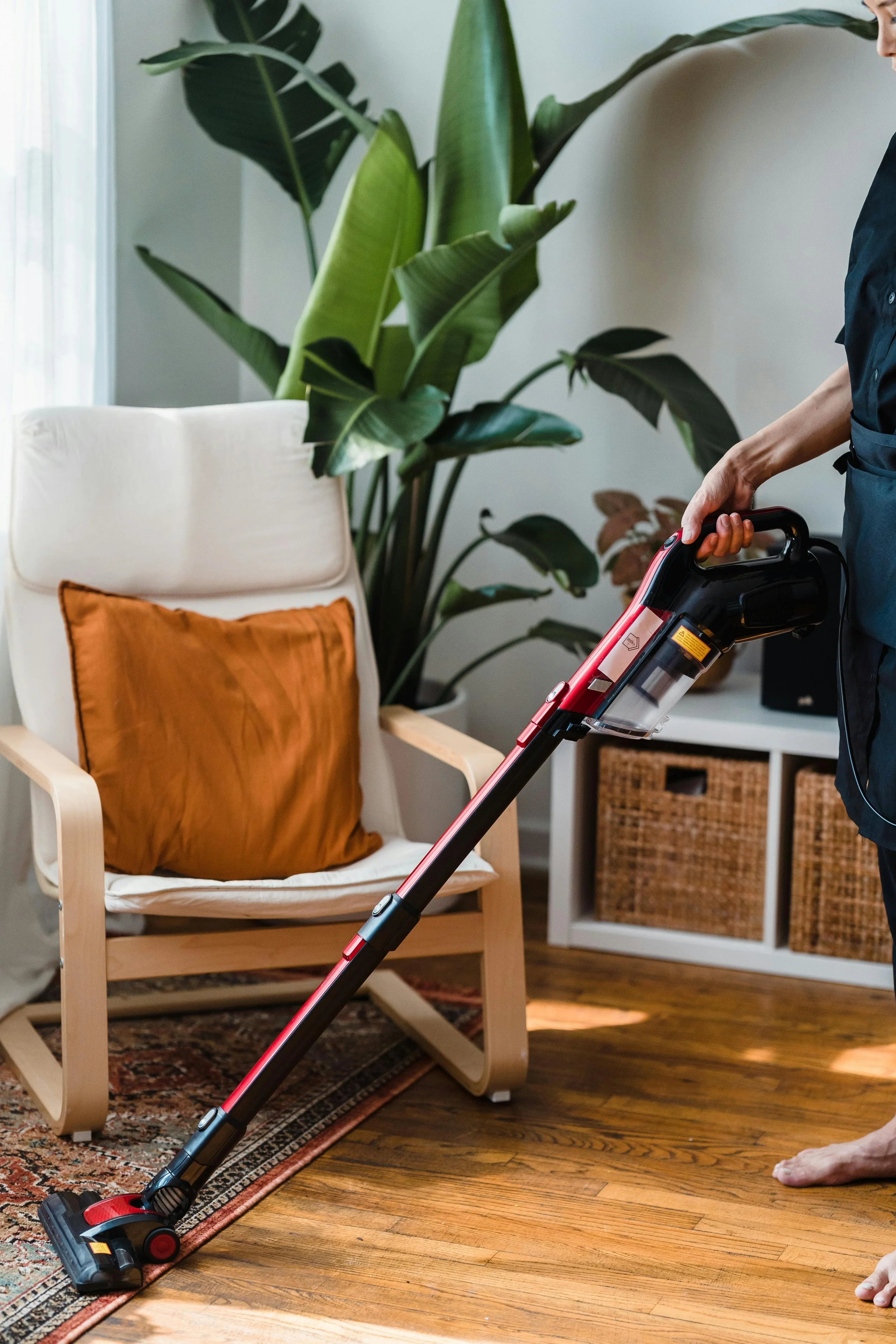
This one sounds excessive until you realize how much of a difference it makes for your indoor air quality. Dust, food crumbs, pet hair, pollen tracked in from outside, all of it settles on your floors and then gets kicked back up into the air every time someone walks through.
If you vacuum your main living areas once a day, you're removing all that stuff before it has a chance to circulate through your home's air. It keeps your floors cleaner, your air cleaner, and it actually reduces the amount of deep cleaning you need to do later. This isn't about perfection. It's about interrupting buildup before it becomes a problem that requires harsh chemical solutions.
Use a vacuum with a HEPA filter so you're actually trapping particles instead of just blowing them around. Brands like Shark and Dyson make good options at various price points. You don't need to vacuum your entire house every day. Just focus on the spaces where your family spends most of their time.
This daily vacuuming routine is especially important if you have kids who spend a lot of time on the floor, or if anyone in your family deals with allergies or asthma. It's one of the most effective things you can do to improve air quality. This is additive to proper ventilation, not a replacement for it, but it makes a measurable difference in what your family is breathing.
What Weekly Tasks Keep Everything Manageable?
Once you've got your daily tasks down, there are a few weekly tasks that keep the rest of your house from getting overwhelming. The key is not trying to do everything in one day. Spread it out so you're doing one or two things each week, not spending an entire Saturday deep cleaning.
Bathrooms
Bathrooms need weekly attention because moisture and humidity create the perfect environment for mold and mildew. However, cleaning without proper ventilation is ineffective. Make sure your bathroom has adequate airflow through an exhaust fan or open window. Weekly cleaning is necessary but insufficient without moisture control.
Wipe down sinks, toilets, and showers once a week with your multi-surface cleaner or a bathroom-specific cleaner if you prefer.
For toilets, use a plant-based toilet cleaner like Better Life or make your own with baking soda and vinegar. You don't need harsh chemicals to get your toilet clean. You just need something that breaks down buildup and disinfects without releasing toxic fumes.
For shower and tub cleaning, a paste made from baking soda and dish soap works surprisingly well on soap scum and hard water stains. Apply it, let it sit for a few minutes, scrub with a brush, and rinse. No harsh chemicals, no overwhelming smell, and it actually works.
Floors
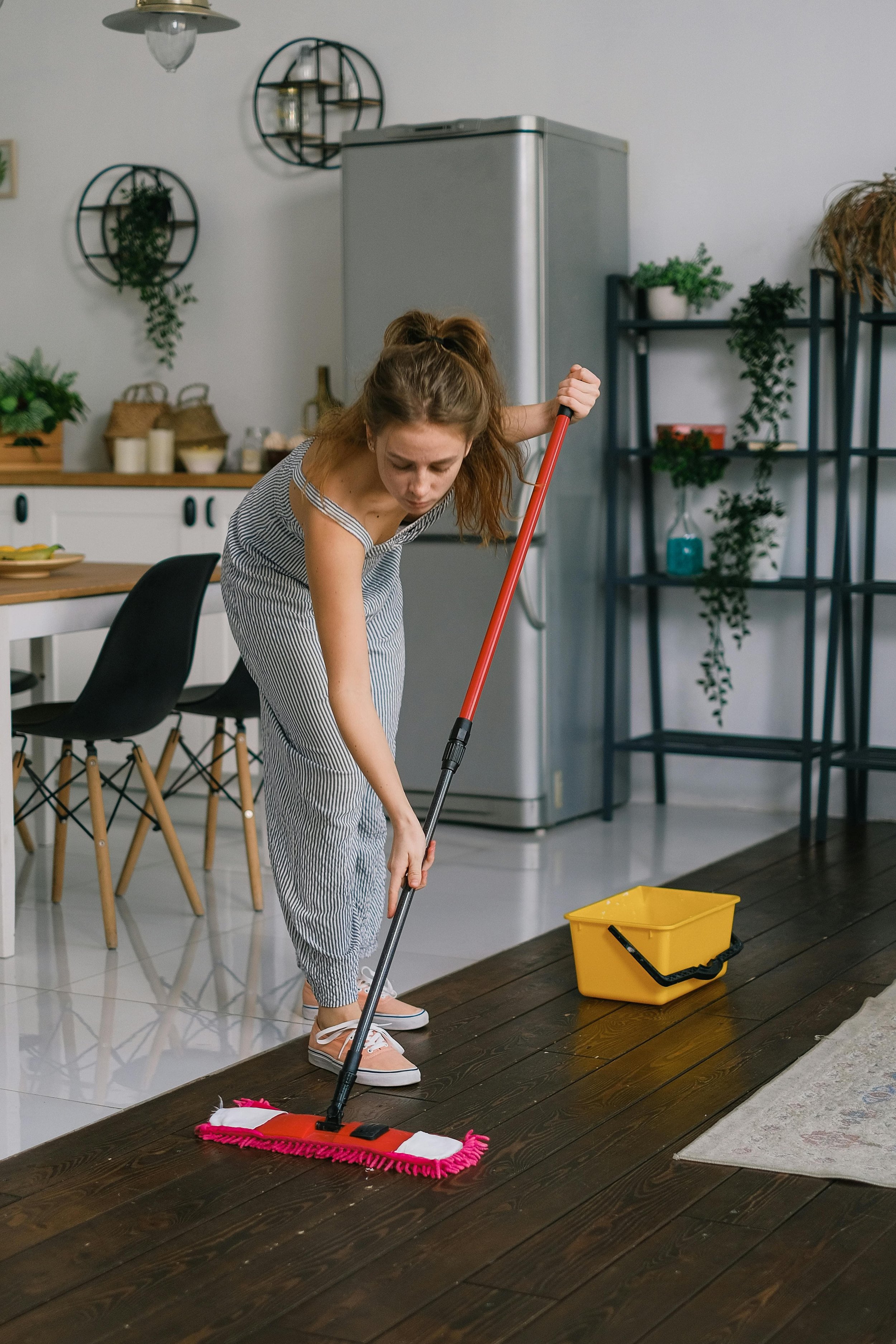
In addition to your daily vacuuming of high-traffic areas, mop your hard floors once a week. Use a pH-neutral floor cleaner that's safe for whatever type of flooring you have. Method makes good floor cleaners for tile and hardwood, or you can make your own with water, a small amount of castile soap, and skip any added fragrance.
The key is using the right product for your floor type so you're not damaging the finish or leaving residue that dulls the surface over time. Wood floors especially need a cleaner that's designed not to strip the protective coating.
Dusting
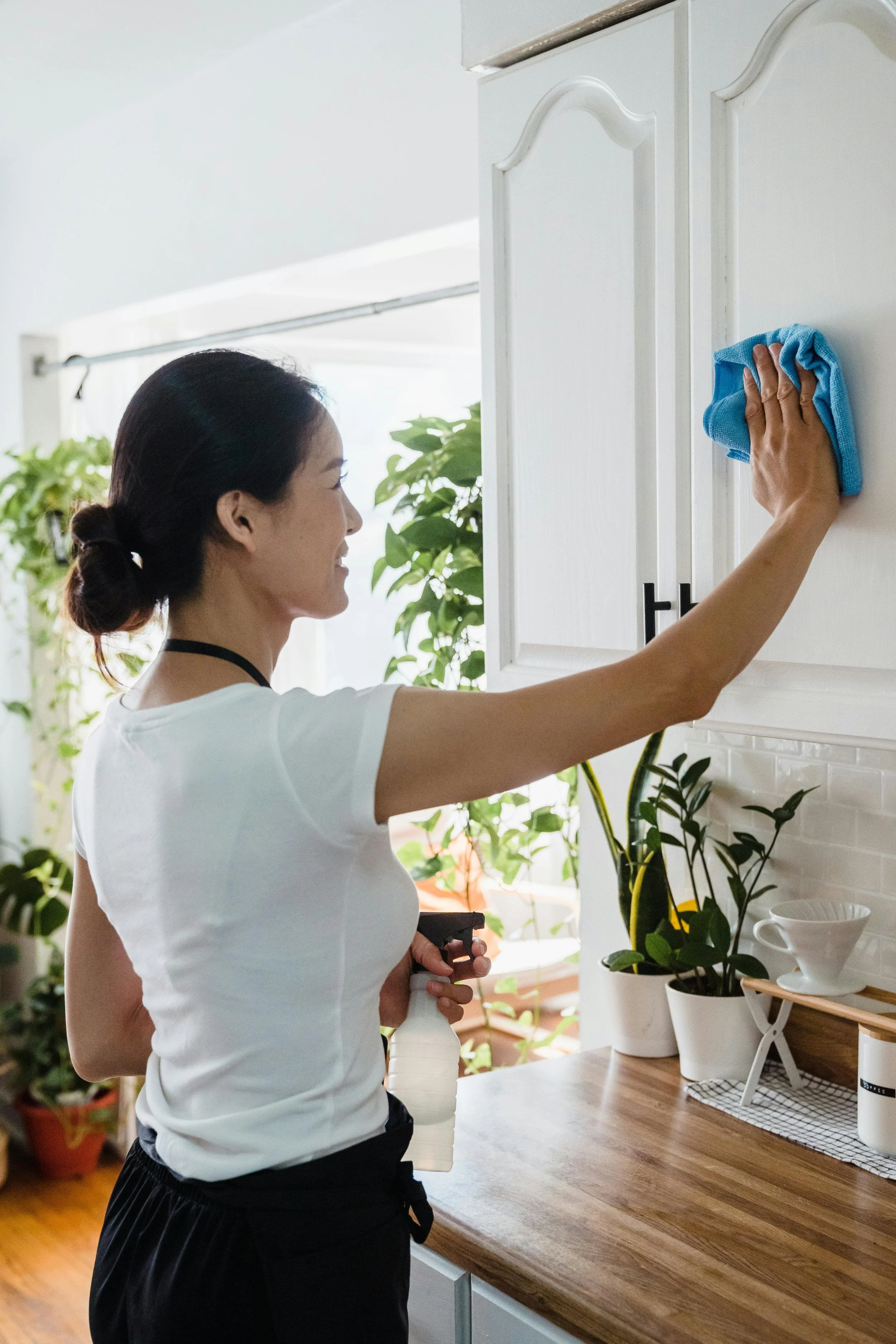
Dust surfaces once a week with a damp microfiber cloth. Going room by room, wipe down surfaces, shelves, and anything that tends to collect dust. The damp cloth traps dust instead of just moving it around the way dry dusting does.
You don't need furniture polish or dusting spray. Just water and a microfiber cloth gets the job done without adding unnecessary products or chemicals to your routine.
What About Monthly and Seasonal Deep Cleaning?
There are some tasks that only need attention once a month or a few times a year. Don't stress about doing these more often than necessary. That's how you burn out and give up on having any routine at all.
Monthly Tasks
Once a month, clean things like baseboards, light fixtures, ceiling fans, and the inside of your microwave. These are the tasks that most people forget about completely until they're visibly dirty, which usually means they're really dirty.
But if you put them on a monthly rotation, they never get bad enough to require serious effort. A quick wipe-down keeps them clean without turning it into a major project.
Also check under your sinks monthly for any leaks or moisture issues. Catching a small leak early prevents mold and water damage that becomes a much bigger problem if you ignore it.
Seasonal Tasks
A few times a year, tackle things like washing windows, cleaning out the fridge and freezer, wiping down kitchen cabinets, and cleaning air vents and ducts.
These tasks don't need to be done on a strict schedule. Just do them when you notice they need it or when you have a free afternoon and the motivation to knock out a bigger project.
Regarding air ducts: Annual air duct cleaning is not routine maintenance and is often unnecessary. Position this as a targeted intervention for specific conditions like post-renovation, visible mold, pest infestation, or unusually heavy dust accumulation. For routine maintenance, focus on regularly changing HVAC filters and cleaning accessible vents and registers.
What's on the Essential Product List for an Eco-Friendly Routine?
You don't need a cabinet full of products to maintain a clean home. You need about five things, and most of them are multipurpose.
Multi-Surface Cleaner
This is your workhorse. Use it on counters, tables, stovetops, sinks, appliances, pretty much everything except windows and wood floors. Aunt Fannie's, Blueland, or Branch Basics all make good options.
Floor Cleaner
Get one that's appropriate for your floor type. If you have mostly tile, a general pH-neutral cleaner works. If you have hardwood, make sure it's formulated not to damage the finish.
Toilet Cleaner
You need something slightly more heavy-duty for toilets, but it doesn't need to be bleach or harsh chemicals. Better Life or a DIY baking soda and vinegar combo works well.
Dish Soap
You're using this for dishes obviously, but it also works for cleaning the shower, scrubbing tough stains, and making your own cleaning solutions. Get something plant-based and fragrance-free. Avoid brands that rely heavily on synthetic fragrance even if they market themselves as “natural.”
Baking Soda, Vinegar, and Castile Soap
These are your DIY basics. Baking soda is great for scrubbing and deodorizing. Vinegar works for cutting grease and dissolving mineral deposits, but it's not a disinfectant, so save it for cleaning tasks rather than sanitizing. It also works well for softening laundry. Castile soap is a gentle, multipurpose soap you can use for almost anything. Dr. Bronner's is the most well-known brand.
That's it. Five products plus a few household staples, and you can clean your entire house without toxic chemicals or a dozen specialized products cluttering up your cabinets.
Why Do Tools Matter More Than You Think?
The right tools make cleaning easier and more effective, which means you're more likely to actually do it. Don't cheap out on cleaning tools if you want your routine to stick.
Microfiber Cloths
Get a set of good quality microfiber cloths for cleaning and dusting. They trap dirt and bacteria better than regular cloths, they're reusable, and they work without needing a lot of cleaning products. Wash them regularly and they'll last for years.
Vacuum with HEPA filter
I already mentioned this for daily vacuuming, but it's worth repeating. A vacuum with a HEPA filter makes a measurable difference in your indoor air quality. It's worth the investment if you're serious about creating a healthier home.
Spray Bottles
Get a few good quality reusable spray bottles for your cleaners. Glass bottles are ideal because they don't leach chemicals and they last forever, but sturdy plastic works too if that's what you have. Blueland sells their cleaners with reusable bottles, which is convenient if you're starting from scratch.
Scrub Brushes
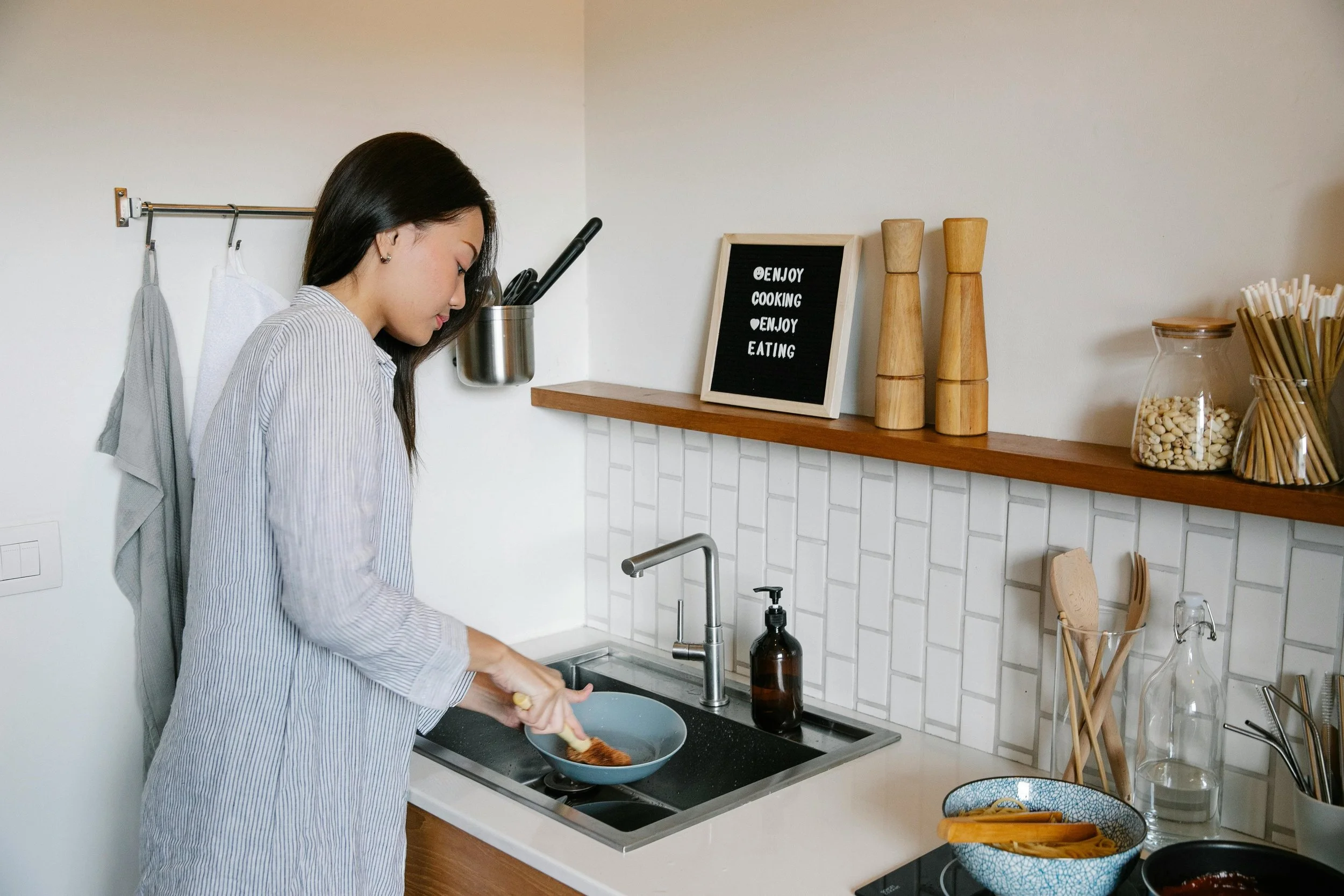
Get a few different brushes for different tasks. A toilet brush, a smaller brush for grout and tight spaces, and a larger brush for scrubbing showers and tubs. Natural bristle brushes work well and don't shed plastic particles the way synthetic brushes do.
How Do You Build Habits That Actually Stick?
The difference between a cleaning routine that works and one that fails is consistency. And consistency comes from making it as easy as possible to do the tasks you've committed to.
Keep your cleaning supplies where you use them. If you're wiping down kitchen counters every day, keep your spray cleaner and cloth under the kitchen sink or in an easily accessible spot. Don't make yourself go to another floor of the house to get what you need every time you want to clean something.
Build cleaning into your existing routines. Wipe down the kitchen after dinner while you're already in there doing dishes. Vacuum while you're waiting for something to finish cooking. Do a quick bathroom wipe-down while your kid is in the bath.
Don't aim for perfection. Some days you're going to skip the vacuuming or forget to wipe down the counters. That's fine. Just pick it back up the next day. A cleaning routine isn't about being perfect. It's about maintaining a baseline level of cleanliness without it taking over your life.

What's the Real Benefit of Having a Routine?
The irony of having a consistent cleaning routine is that it actually means you spend less time cleaning overall. When you're staying on top of things daily, you never have to spend your entire weekend deep cleaning because everything got out of control.
You're preventing buildup instead of constantly dealing with it after the fact. You're using gentle products that don't require heavy scrubbing because you're not letting grime sit for weeks before addressing it. And you're maintaining a healthier home environment without filling it with toxic chemicals every time you clean.
That's what an eco-friendly cleaning routine actually is. Not a complicated system or a perfect schedule. Just a few consistent habits using products that don't harm your family's health or the environment. Simple, sustainable, and realistic for busy families.
If you're ready to simplify your cleaning routine and create a system that actually works without the overwhelm or the toxic products, come join us in the Nest Earth community. You'll get access to vetted product recommendations, step-by-step guides for making swaps, and support from other parents who are working on creating healthier homes for their families. You don't need to clean like an influencer or follow someone else's elaborate schedule. You just need a simple plan that makes sense for your home and your family.