The 2026 PFAS Ban Map: Which States Just Restricted PFAS in Kids' Products
Published June 11, 2026 · Last updated June 11, 2026 · By Gabriela Fiorentino, LEED AP
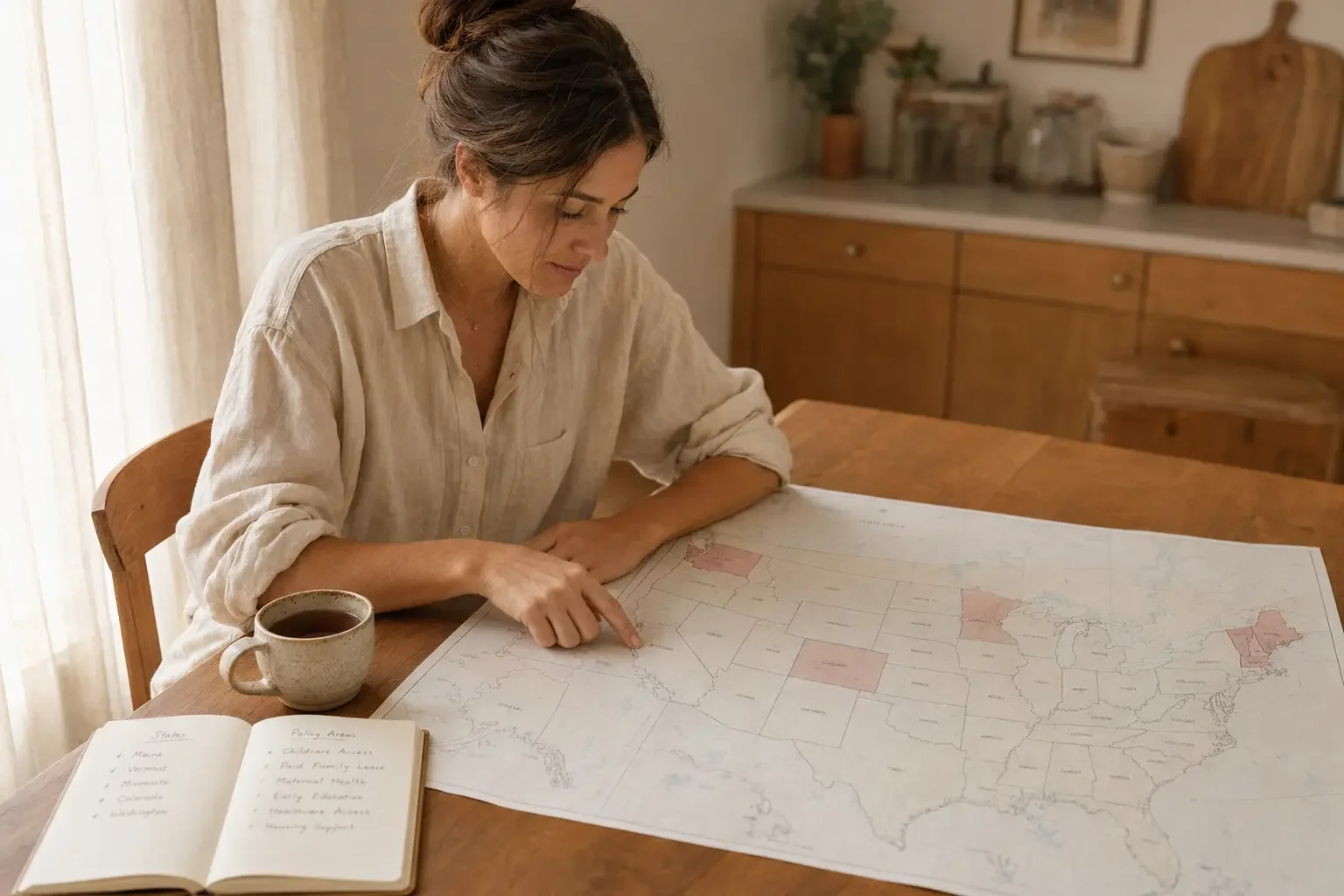
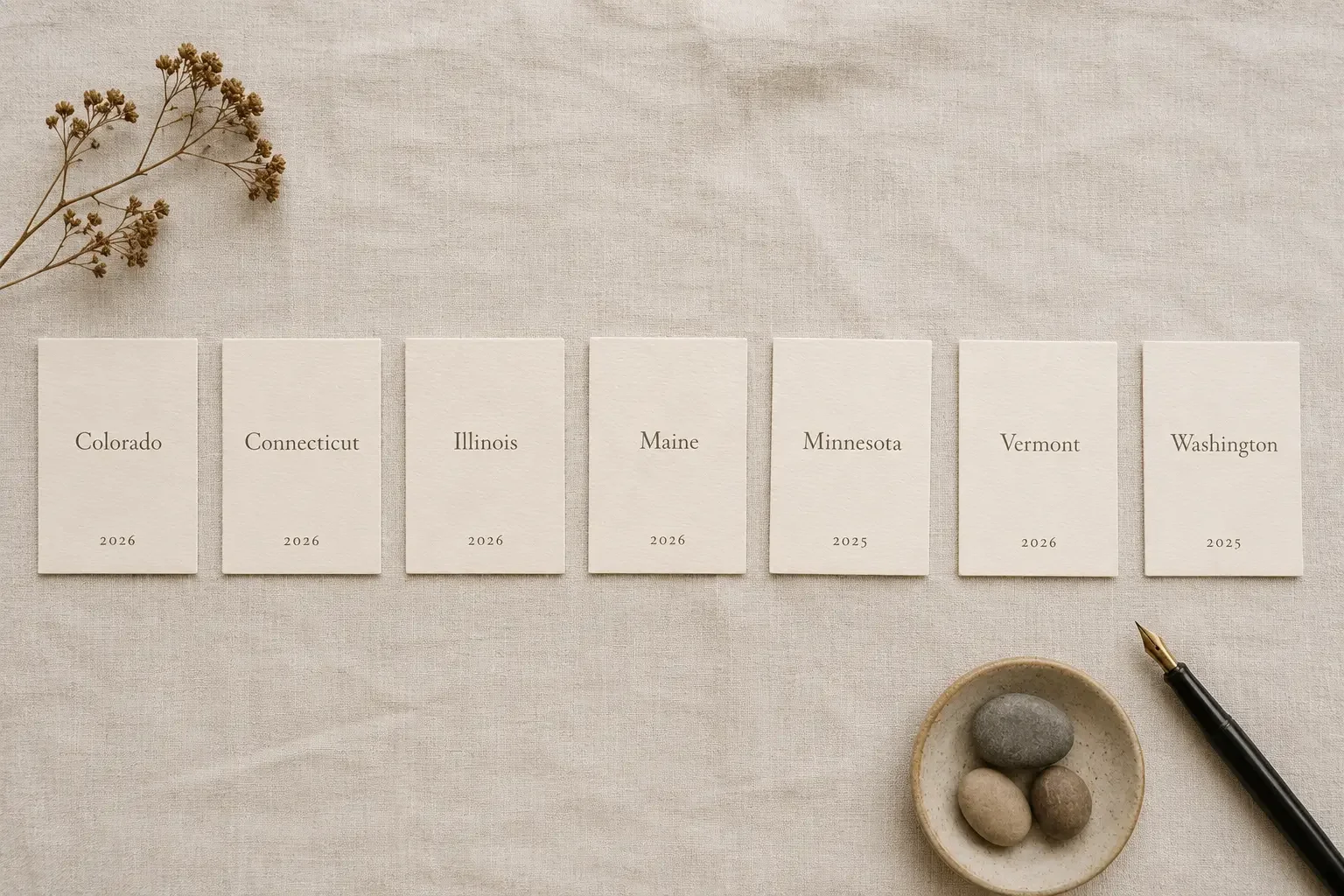
Six US states have new PFAS product bans taking effect January 1, 2026. A seventh, Minnesota, started its ban a year earlier under Amara's Law. The combined rules cover everything from car seats to cosmetics to swaddles — but the categories, definitions, and exemptions differ state by state. This guide maps all seven, lists what each one covers, and explains what changes for parents shopping across state lines.
- Six states have new PFAS sales bans on consumer products taking effect January 1, 2026: Colorado, Connecticut, Illinois, Maine, Vermont, and Washington.
- Minnesota's parallel ban under Amara's Law took effect January 1, 2025, with broader manufacturer reporting due July 1, 2026.
- "Juvenile products" — a category in several state laws — typically covers cribs, bassinets, swings, carriers, strollers, pacifiers, play yards, and disposable diapers.
- The bans apply to sale and distribution into the state, including most online orders shipped to addresses in those states.
- Maine, Minnesota, and New Mexico have laws on the books that will ban almost all intentionally added PFAS in any consumer product by 2032.
The Seven States and What They Restricted
Seven US states now have new-product sales restrictions on intentionally added PFAS in consumer goods either newly effective in 2026 or active since 2025. The scope and product categories differ by state, but six of the seven share a January 1, 2026 effective date.
| State | Effective Date | Restricted Categories Most Relevant to Parents |
|---|---|---|
| Maine | Jan 1, 2026 | Juvenile products, textiles, cleaning products, cookware, cosmetics, dental floss, menstruation products, upholstered furniture, ski wax[1] |
| Minnesota | Jan 1, 2025 (sales) · Jul 1, 2026 (reporting) | Products for children under 12, carpets and rugs, cookware, cosmetics, dental floss, fabric treatments, menstruation products, ski wax, textile furnishings, upholstered furniture, cleaning products[2] |
| Vermont | Jan 1, 2026 | Juvenile products (full statutory list), cosmetics, menstrual products, incontinence products, aftermarket fabric treatments, carpets and rugs, artificial turf, cookware, ski wax, textile articles[3] |
| Colorado | Jan 1, 2026 | Cookware, dental floss, menstrual products, ski wax, cleaning products, leather and textile furniture; also restricts intentionally added PFAS in artificial turf installations[4] |
| Connecticut | Jan 1, 2026 | Apparel, cookware, cosmetics, children's products, food packaging, and outdoor apparel for severe wet conditions[5] |
| Washington | Jan 1, 2026 | Cosmetics under Toxic-Free Cosmetics Act; broader category restrictions phasing in via Safer Products program[5] |
| Illinois | Jan 1, 2026 | Cookware, cosmetics, children's products, food packaging or food contact products, intimate apparel, personal care items[1] |
How to Tell If a Product You Own Is Affected
None of these laws require you to discard products you already own. The bans apply to new sales — to manufacturers, retailers, and distributors — not to household possession. If your existing baby carrier or stroller was made with PFAS, the law doesn't penalize you for continuing to use it.
That said, you may want to evaluate your existing items against the same logic that drove the bans. The fastest test is the same one we use in our PFAS in kids' clothes guide: scan the product or label for any of three claims — moisture-wicking, stain-resistant, or wrinkle-free — and the presence of any of these without an explicit PFAS-free certification means treat the item as likely PFAS-treated.
When a state law passes a category restriction on PFAS, four questions tell you what the law means for you in practice:
1. Effective date. Has the rule actually taken effect, or is it still phasing in?
2. Categories covered. Does the law cover the specific product types you're shopping for? "Juvenile products," "children's products," and "products for children under 12" mean slightly different things in different states.
3. Intentionally added vs incidental. All seven of these state laws restrict intentionally added PFAS. Trace contamination from supply-chain sources is not currently restricted, though some states are moving toward total-organic-fluorine thresholds.
4. Exemptions and "currently unavoidable use." Maine, Minnesota, and Vermont allow manufacturer exemptions where alternative chemistries are not yet commercially available. These exemptions are public — you can read them on each state's official environmental department site.
What These Rules Cover — And What They Don't
The most useful single document for understanding what counts as a "juvenile product" is Vermont's statutory definition under S.25 (Act 131). It's the most detailed list any of the seven states has published.
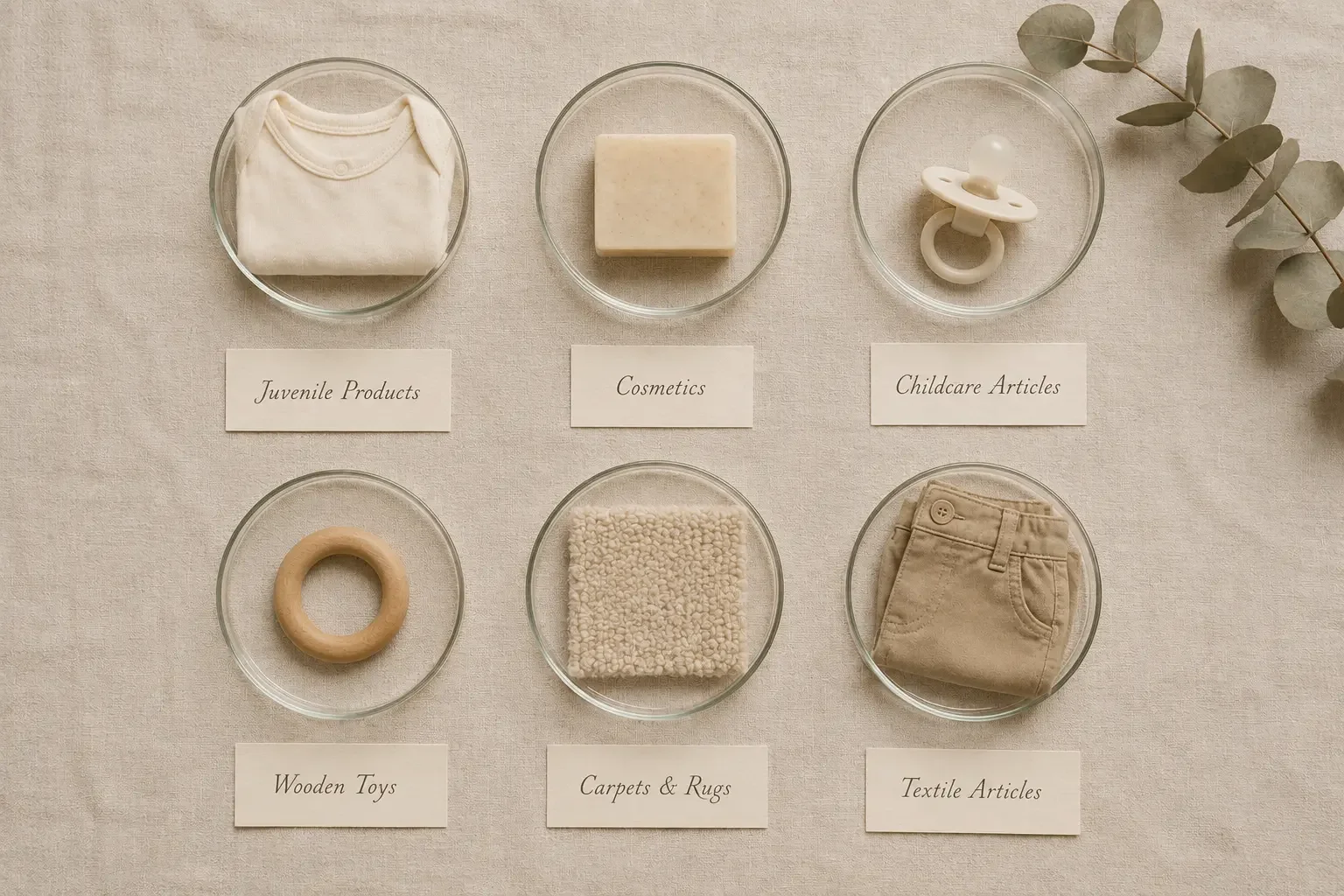
Vermont's law defines a "juvenile product" as "a product designed or marketed for use by infants and children under 12 years of age," explicitly including baby and toddler foam pillows, bassinets, bedside sleepers, booster seats, changing pads, infant bouncers, infant carriers, infant seats, infant sleep positioners, infant swings, infant travel beds, infant walkers, nap cots, nursing pads, nursing pillows, pacifiers, play mats, playpens, play yards, polyurethane foam mats and pads, portable infant sleepers, portable hook-in chairs, soft-sided portable cribs, strollers, toddler mattresses, and disposable single-use diapers[3].
What's not covered by the 2026 rules in most states:
- Children's electronic products — computers, audio and video equipment, calculators, wireless phones, game consoles, handheld devices with video screens. These are explicitly excluded from "juvenile products" in Vermont's definition.
- Outdoor apparel for severe wet conditions. Maine and Vermont delayed restrictions on this category until 2028 or 2029 in recognition that PFAS alternatives for technical waterproof outerwear are still developing.
- Medical devices and certain personal protective equipment. Most states grant temporary exemptions for these uses.
- Cars and car seats with PFAS in motor-vehicle components. These are governed at the federal level, not state level. (For car seat rules, see our forthcoming guide on the December 2026 FMVSS 213a rule.)
What This Means for Online Shopping Across State Lines
The shorthand: if you live in one of these seven states, the rules apply to what stores can sell to you — including online retailers shipping to your address. If you live outside these states, the rules don't restrict your purchases, but they're affecting which products manufacturers continue to make at all.
Three patterns to be aware of as the bans phase in:
- Geographic checkout restrictions. Some manufacturers have started blocking checkout for shipping addresses in restricted states rather than reformulating. Watch for "this product cannot be shipped to your state" notices.
- National reformulation by the largest brands. Manufacturers selling at national scale typically reformulate one product line for all 50 states rather than maintain regional inventory. This is the upside of strict state laws — they often improve baseline product safety nationwide, not just in the regulating states.
- Disclosure-only options. Maine's 2029 outdoor-apparel rule permits sale of PFAS-treated severe-wet-condition gear if the product carries the disclosure "Made with PFAS chemicals." Expect similar disclosure-only options to expand in the next round of state laws.
Want our printable state-by-state cheat sheet of effective dates and product categories? It's in our community library.
Join the Community →The 2027–2032 Horizon: What's Coming Next
The 2026 effective dates are a wave, not the end of the wave. Three trajectories worth tracking through the rest of the decade:
The seven states ranked by scope of new product categories restricted in 2026. Maine, Vermont, and Minnesota are the broadest. Washington's 2026 categories are narrowest but its Safer Products program continues to add more.
Licensed under CC BY 4.0. Free to use with attribution and a link back to this post.
The three trajectories worth tracking
1. The Maine/Minnesota/New Mexico 2032 cliff. These three states have laws on the books that will, by January 1, 2032, prohibit the sale of any consumer product containing intentionally added PFAS unless the use is specifically determined to be "currently unavoidable." This is the strictest framework currently legislated anywhere in the country.
2. Eight more states in 2027. An additional eight states have category-specific restrictions taking effect in 2027, including expansions in some of the states already restricting in 2026. By the end of 2027, more than half of US states will have at least one PFAS product restriction in some category.
3. Federal action on water and disposal. The EPA has set drinking-water maximum contaminant levels for several PFAS compounds and continues to expand its regulatory roadmap on disposal, remediation, and Superfund liability. State product bans and federal water rules together create a tightening landscape — even where you can still buy PFAS-treated products, the long-term economics of producing them is shifting.
The pattern across these laws is consistent: ban the highest-contact consumer categories first, expand to all categories over time, and provide a regulator-determined exemption only where a safer chemistry doesn't yet exist.
For parents, the simplest framing is that the 2026 rules don't change the home you already have — but they do significantly change what's still on store shelves. Combined with the PFAS replacement order for kids' clothes and the certifications worth trusting, you have the three tools you need: what the law restricts, what to replace first, and what to look for going forward.
Frequently Asked Questions
Which states banned PFAS in kids' products in 2026?
As of January 1, 2026, six states have product-sale bans newly in effect: Colorado, Connecticut, Illinois, Maine, Vermont, and Washington. Minnesota's parallel ban under Amara's Law took effect a year earlier on January 1, 2025, with its full manufacturer reporting requirement taking effect July 1, 2026.
What does Maine's 2026 PFAS ban cover?
Maine's January 1, 2026 sales prohibition covers cleaning products, cookware, cosmetics, dental floss, juvenile products, menstruation products, ski wax, upholstered furniture, and most textiles that contain intentionally added PFAS. Outdoor apparel for severe wet conditions and a broader product ban follow in 2029 and 2032.
Can I still buy PFAS-treated products in 2026?
In the seven states with bans, retailers cannot legally sell or distribute new products with intentionally added PFAS in the restricted categories. Products already owned by households are not subject to the ban. Online orders shipping into these states are also covered by the rules, though enforcement varies.
What's a "juvenile product" under these laws?
Vermont's statutory definition is the most detailed and includes: baby and toddler foam pillows, bassinets, bedside sleepers, booster seats, changing pads, infant bouncers, infant carriers, infant seats, infant sleep positioners, infant swings, infant travel beds, infant walkers, nap cots, nursing pads, nursing pillows, pacifiers, play mats, playpens, play yards, polyurethane foam mats and pads, portable infant sleepers, portable hook-in chairs, soft-sided portable cribs, strollers, toddler mattresses, and disposable single-use diapers.
What's coming after 2026?
Maine, Minnesota, and New Mexico have laws that will ban all products containing intentionally added PFAS by 2032 unless the use is determined to be currently unavoidable. Eight more states have additional category-specific restrictions taking effect throughout 2027, with the regulatory map continuing to expand.
References
- Promotional Products Association International. *Catch Up On Current State Laws Regulating PFAS Chemicals.* October 2025. ppai.org/media-hub/catch-up-on-current-state-laws-regulating-pfas-chemicals
- Minnesota Pollution Control Agency. *Communications Toolkit: PFAS Reduction and Amara's Law.* 2026. pca.state.mn.us/communications-toolkit-pfas-reduction-and-amaras-law
- Vermont General Assembly. *9 V.S.A. § 2494e — Definitions [Effective January 1, 2026].* 2025. law.justia.com/codes/vermont/title-9/chapter-63/section-2494e
- Morgan Lewis. *State Regulation of PFAS in Consumer Products Continues to Gain Momentum in 2026.* January 21, 2026. morganlewis.com/pubs/2026/01/state-regulation-of-pfas-in-consumer-products-continues-to-gain-momentum-in-2026
- Safer States. *2026 Analysis of State Policy Addressing Toxic Chemicals and Plastics: Laws Going Into Effect in 2026.* February 2026. saferstates.org/resource/2026-analysis
- Maine Organic Farmers and Gardeners Association. *Consumer Products Containing Intentionally Added PFAS Banned in Maine.* January 7, 2026. mofga.org/news
Want updates as the PFAS regulatory landscape changes?
Join the free Nest Earth community for the printable 2026 state-ban cheat sheet, updates when new state laws take effect, and parents working through the same calculus you are.
Join the Community →